Tuesday, 16 December 2014

Starting science

Black oyster catchers
Saturday marked our first week on the island, with 12 to go. I've started to get to grips with the endless names associated with places around the island, including lighthouse hill, saddle rock, indian head, sea lion cove,  and the bone yard. I'm learning how to notice the small differences between the gull species that visit and breed here, and how to identify the song birds.
Brown pelicans in flight
After the aforementioned storm blew over, we had a few glorious days of sunshine, which allowed us to get stuck in to the science which the first week was leading up to. Alongside the clear skies, came brilliant views of stars however, which I took advantage of, taking photos whilst a barn owl screeched at me from above, waves crashed nearby, and sea lions barked in the pitch black. 

We have undertaken a few elephant seal census' (counting individuals in attendance around the island including age class), and I have done a cetacean survey from the lighthouse, seeing a grey and a humpback whale within an hour. They weren't close enough for photos, although I am hopeful that will change as whale season truly gets underway!

Now that the first bull has arrived, we are regularly going down into the elephant seal colony to resight tags to determine identities so that we can track the demographics throughout the season.
Andre, the first bull of the season (he wasn't happy that we caused a female to move away from him slightly).
Another reason for going down daily at the moment is to displace the californian sea lions in the colony. This is done with permission from the federal government, and moving them en-masse at the start of the season makes them realise to use other sections of the island, reducing the overall disturbance to them across the season, compared to moving a few every day for several months. 
A californian sea lion doing a face plant (or diving...) after being displaced.

Being amongst the colony is amazing, getting so close to large animals (bulls can weigh up to 2000kg), and you truly appreciate the power of them. I witnessed a display of this power, as Andre picked up a juvenile who was clearly annoying him, in his mouth, and proceeded to slam him against the ground three times. This happened only 5 metres in front of us, but the juvenile seemed unharmed. The bulls really aren't bothered by our presence, and it is possible to sneak up behind them when they are asleep and lift up their rear flippers, and even to punch a tag in place without them waking up. It is the young experienced ones that are noisy and snarl at you, both because they are inexperienced, and because they may feel like they have something to prove. It's kind of cute, in a spittle covered teethy kind of way.

As we are so close to these animals, we often notice any entanglements. There have been a few so far, from buoys connected with rope, to monofilament and packing straps. We do our best to disentangle, but often it is too deep, or the animal is in an inaccessible area. It really does highlight the requirement for responsible disposal of rubbish.
Ryan sneaking up on an elephant seal with a packing strap around its neck to attempt to cut the entanglement off.
We also see quite a few dead and dying animals, from birds to headless elephant seals from possible shark attacks. We record all of this, and I am getting used to telling the difference between a decapitated common murre killed by a peregrine falcon, to a cassins auklet killed by a barn owl.
A western gull picking at the remains of a seals skin
Talking of murres, a few days ago hundreds of them arrived at the island, circling as a "murre-nado" before landing.
Hard to see, but all the black dots are murres
A member of the song bird team has stayed behind for an extra two weeks to pass over the bird research to us. He has done a great job at passing on his knowledge, and allowing us to watch him band the animals he catches.
A burrowing owl post-banding
As we work every day whilst on the island, Sunday is slightly more relaxed, making a large brunch every week. Before brunch this week, we did our bi-monthly salamander survey, counting 43 individuals under 100 cover boards. Once a month we do a larger survey spanning 500 boards.
Arboreal salamander

Friday, 12 December 2014

Surviving the storm


The storm hit last night, taking out our phone lines and subsequently internet. We kept power, however the VHF marine radio was filled with static for most of the day, and our sat phone had a few issues due to the insane conditions. We survived though! It wasn't quite as bad as forecast, but still flooded the area surrounding the house and waves were breaking over large landmarks around the island. Thankfully the house was fairly sheltered from the wind, although it made it hard to stand in some places around the island. Due to the heavy rain, I didn't manage to get too many photos of the worst of it, although if you imagine worse than these waves, you may get within range of the full-blown situation.
Looking towards west-end

The raised crane platform at east landing where boats are hauled out of the water

In front of the crane, around the corner from where we take sea surface temperature readings (old-school style with a bucket and rope from the cliff)


Thankfully it doesn't seem like there has been any major damage to the island, although we are expecting a wet few days still. At least it means that we have plenty of water to last us through the season. This doesn't mean that we get to shower any more often however. We shower every four days as we rely on filtered rain water for all purposes, although despite the most rainfall in years within California, it has to last the island researchers throughout the whole year, assuming that the "drought" continues.

After a day of wandering the island in the rain smothered in many layers of waterproof gear and sheltering whilst inputting data, we should be continuing to collect biological data tomorrow. Here is a quick timelapse taken from the living room window, followed by a non-storm related photo of a burrowing owl (sadly I didn't have my telephoto lens at the time!!)


Thursday, 11 December 2014

Welcome to the Farallones

Today marks my third day as a resident on south-east farallon island.
Below is a video showing the various stages of my journey to this point, starting in Edinburgh.

https://vimeo.com/113982690
The view west from SEFI

We landed on Saturday after an early start, sailing in the dark beneath the golden gate bridge. En-route to the islands we saw a grey whale heading south to Mexico, but didn't see too much else due to heavy fog. Everyone on deck slept where they lay and sat, and I woke up just as the islands suddenly appeared through the fog. It is easy to see how so many ships have wrecked here. The landing went smoothly after waiting for the tide to lower slightly whilst we watched inquisitive Californian sea lions checking out the boat and common murres and brown pelicans flying overhead. Transporting our gear from north landing to the house was incredibly hard work, pushing wheel barrows up steep inclines peppered with rocks. Finally we made it though, and settled into our home.

Since then, I have gotten to know Ryan, Aymeric ("moomoo"), Amanda, and RJ better, and gotten my bearings on the island. The first few days have been focussed primarily on safety aspects, both from our point of view, and from the animals as we try to limit our impact as much as possible. We have been trained to operate two crane types, one electric and one manual for both landing sites so that we can winch boats and supplies onto the island as the sea is too rough for docks to survive for long.

I've already seen many exciting animals, including grey and humpback whales, Californian and stellar sea lions, elephant seals (I'm still impressed by the size of the first bull that has turned up ready for breeding season), harbour seals, brown pelicans, brown footed boobies, the only northern gannet in the pacific (as far as we know), anna's hummingbird, and other sea and song birds. We are doing our first elephant seal census tomorrow which should be interesting!


Californian sea lions hauled out


The first bull of the season sleeping


Banding a black pheobe

A storm is brewing, and it is supposed to reach 18 foot swells with an extra 10 feet of wind waves (28 foot in total, just in-case that isn't clear...), with 55 knot winds on Thursday. The lead researcher out here has been present for 4 years, and hasn't seen a storm as big, so it will be impressive!
The view from one of our blinds / hides.

Aymeric watching the waves roll in 20 metres from our house


Wednesday, 3 December 2014

A wet day in California

So, after 18+ hours of planes and airports yesterday, I am finally in CA. As I got into LA yesterday, I was struck by how hot it was in comparison to home, being 16c! I'm using the heat as an excuse as to why I left headphones in my pocket, which led to my hands being swabbed for residue which was tested in a machine looking like it should belong in CSI. As I got in after 11pm local time, I just managed to catch the second last BART (subway / overground / elevated rail combo) into the city. Strangely I wasn't too tired as I got to the hostel, so had a chat with a Canadian business student and Indian software engineer who I shared the room with.

I woke up to rain hammering on the roof and windows, waking me up at 8.30am (4.30pm UK time!). At first I was a little confused as California is in its worst drought in memorable history (which is pretty much the entire history in America!!). Turns out there is flooding in Marin county too. Undeterred, I had a quick breakfast and got ready to explore. I packed my bag with cameras and binoculars, and at the last minute decided to line my bag with a drybag. I am very glad that I did. I left the hostel and walked 50 metres down the hill, and immediately saw the golden gate bridge with a backdrop of dark clouds.

I wandered eastwards across from Alcatraz towards fisherman's wharf, looking in shops and being tempted (but resisting) corn dog and seafood stands.
Alcatraz with an accompanying pelican

I made my way to pier 39 to see the sea lions, and this is where I flood the page with videos (excuse the audio, there was a school trip next to me!) and photos.


I debated visiting the aquarium of the bay to escape the rain, although at $21, I resisted and continued on. Back past the hostel, I explored nearer to the golden gate bridge and witnessed a rainbow hitting Alcatraz, but sadly the photos were obscured by fog. The bridge itself however still looked good, although it isn't quite as impressive as i'd imagined.
 
To wrap up the day, I walked all the way to Chinatown, browsed a few supermarkets filled with dried animal products and looked at awesome swords and other weapons that looked rather scary. It is incredible how suddenly the shops and the people change. One street consists of offices and generic san franciscian places, the next is filled with chinese shops and restaurants, with chinese signs (and buses with Chinese announcements). It sounds silly, but I really didn't expect there to be such a sudden divide. After so much walking (San Francisco is big....), I decided to get a bus back to the hostel, so on the way to the stop, I explored Union square and downtown. I wasn't too interested in the shops (there isn't much use for a cashmere jumper from Macy's when it will get bird and seal poo on it in a few days time), so marched through the rain to my stop.
 
 
I am now exhausted, and can't even be bothered to try some fresh seafood for dinner at Fishermans Wharf. Instead, I had a 'wrap in a pack', basically a ready-made fajita kit, chicken and all.
 
Tomorrow I am off to Petaluma to stay in the office until the rest of the team arrive. I'll have a wander in the morning again, but the majority will be spent travelling and settling in. Thursday we are doing a Costco shop to buy anything we need in bulk (chocolate for the island?), followed by a safeway shop on Friday prior to shipping out!

Sunday, 30 November 2014

My last day in Europe

As the title clearly states, today is my last day in the UK, and subsequently, Europe. Tomorrow I make the 16 hour journey to San Francisco. First stop, London. Then LA and finally SF. I've packed my 23 kg of luggage, mostly consisting of warm layers, waterproofs and various gear that will help me to survive on a remote island for 3 months. All that is left for me to do is to check-in online, print off various documents which are a triumph in themselves (it is ridiculously hard to get long-term travel insurance which involves living on a rugged island surrounded by large grumpy mammals, especially as I have moved between countries in the last 12 months).

I've said goodbye to my friends, my girlfriend, and I am spending my last day with my parents. It will certainly be different spending Christmas, New year, and Valentines day away, but I'm sure that it will be an experience I will never forget. Now that I have researched SF and what there is to do, I'm really looking forward to a tired Tuesday exploring.
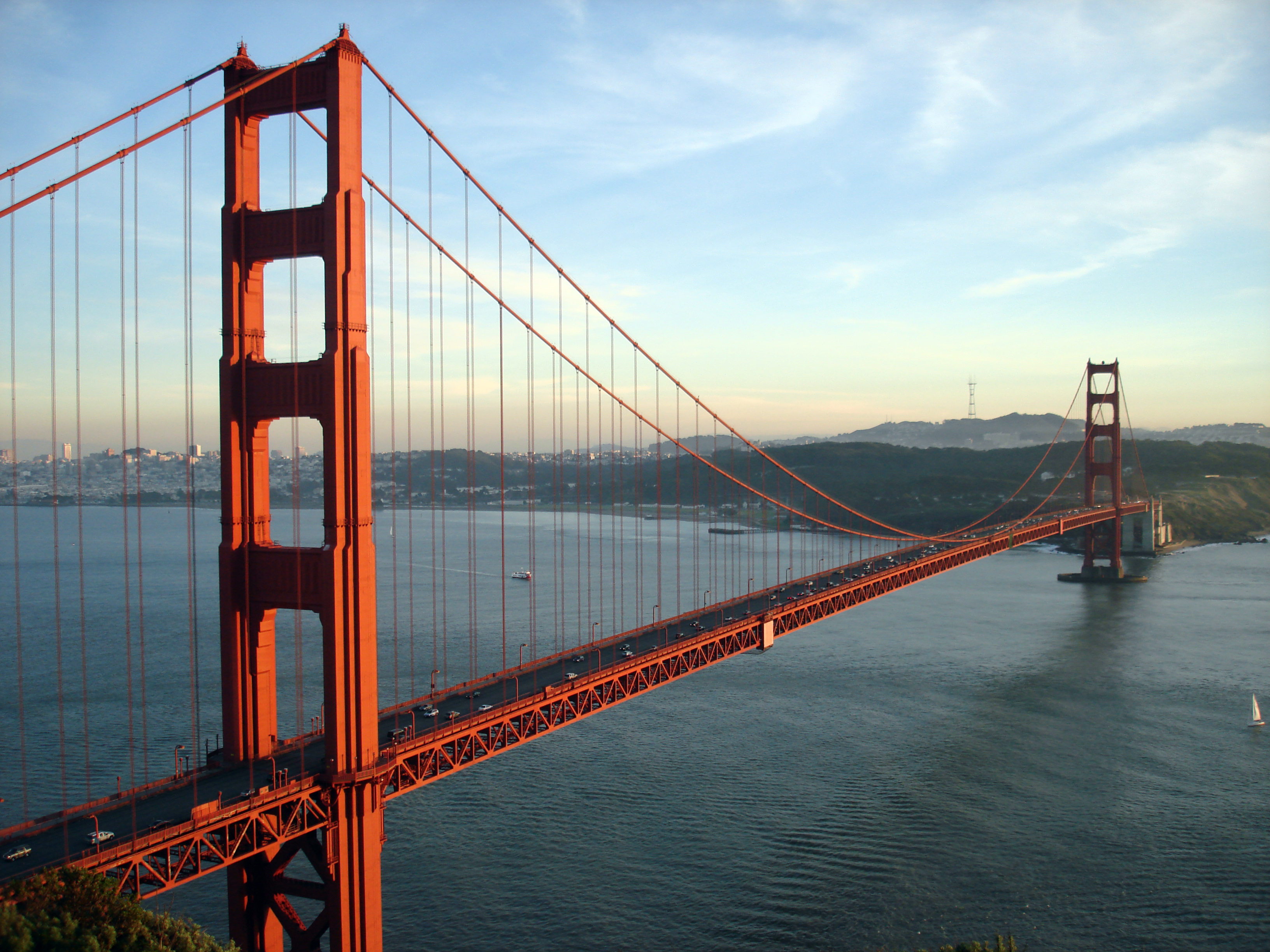
Golden gate bridge (Wikipedia)
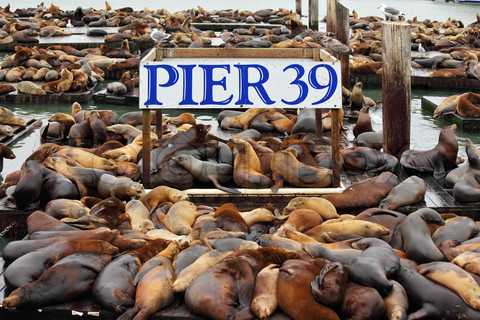
My plan is to wander along the waterfront to fishermans wharf to see all of the fish vendors, and to Pier 39 to see the Californian sea lions which have made it a favourite haul out spot. As this will be my first sighting of a species which will share the Farallones with me, I am rather excited to see them!
A busy day at Pier 39 (criticallyrated.com)
My next stop will of course be the bridge itself, which I plan to walk over, and possibly explore the national park if time allows. I'm aiming to see china town and downtown too, but if I don't manage to fit them in this week, I'll be back in February during my time off from the island.

My next post is likely to be either whilst very tired in SF, busy in Petaluma (the location of the Point Blue Conservation Science office), or on the island itself. Therefore it may consist purely of photos, so the above should give you an idea of what I was up to!


Tuesday, 25 November 2014

Pre-fieldwork update

So, in-keeping with tradition, it has been 7 months since my last post, and a lot has happened. The grovelling outlined in the post below did indeed result in a free copy of the macro software which was used thoroughly; although now I know I didn't actually need it!! I attended UKRSC in St Andrews and presented the methods of my thesis, which seemed to go down well. I am now on the organizing committee for the conference, which is being held in Bangor, Wales in January.


I spent 5 months in Belmullet (County Mayo, Ireland) over the summer, writing up my thesis whilst doing intermittent fieldwork.  I am rather happy with the result of the thesis, gaining a first (distinction), and I am currently writing up a section of grey literature, a note, and a paper resulting from it! I've also submitted an abstract to present at the European Cetacean Society in Malta next year titled "Developing acoustic parameters for dolphin detections and species differentiation using C-PODs." Probably the most notable experience over the summer aside from the academic work was the day that 6 common dolphins live-stranded on a beach nearby. I was working in the office and got a call telling me the situation. Myself, my housemate and an intern drove down and helped out, which ended up taking the entire day, mostly in the water whilst wearing the clothes I'd put on for office work. Thankfully it is a casual office, there were no suits involved; however I feel like I was a bit less prepared than those that turned up in wetsuits! We managed to refloat the dolphins (apart from one that died soon after stranding), although some did re-strand the day after, and again were re-floated by another team.
Live-stranded common dolphins, with me in the middle trying to stop one from rolling over (Photo by Ross Culloch).
After my time in Ireland, I spent a month in New Quay, Wales volunteering for the Seawatch Foundation. Although there wasn't really anything new learned here, it did provide a great opportunity to gain more boat time, becoming experienced in line-transects within Cardigan Bay. Which also allowed me to practice my marine wildlife photography from a platform which wasn't a cliff!

Bottlenose dolphins in Cardigan Bay (James Robbins / Seawatch Foundation)

Since then I have spent some time at home with family, and have just returned from a month with my girlfriend Kathryn in Southampton. I am now preparing for the next adventure which starts in 6 days, which will see me travelling to California! I'm to be a research assistant with Point Blue Conservation Science, working on a rugged and remote island called South-East Farralon (SEFI). It lies almost 30 miles off the coast from San Francisco, and is only 2 miles from the continental shelf. As such it receives a whole host of wildlife taking advantage of the high productivity, including some impressive predators. I'll be living on the island for 3.5 months with human populations ranging from 4 - 8 people. Our research will focus on elephant seals, however we will also study other pinniped species (stellar and californian sea lions, fur seals, harbor seals), migrating grey whales and any other cetaceans seen from atop lighthouse hill, and there will be a few projects carrying over from previous seasons including burrowing owls, and the documentation of any white shark attacks (which will be coming to the end of their season at the islands).

A view of the farallons (http://en.wikipedia.org/wiki/Farallon_Islands) 


For an insight into life on the islands, have a look at some of these links:
http://vimeo.com/23880275
http://losfarallones.blogspot.co.uk/

There are also a few other videos on vimeo and youtube dedicated to the islands which can be reached by searching for "farallon islands" or "SEFI".

I'm sure that I will be very busy once there, putting the finishing touches to the manuscripts for publication, keeping in touch with family and friends, and enjoying the spectacles that the islands have to offer, but I will attempt to keep this blog updated for once, with stories and photos of life on the island.

Monday, 24 March 2014

A helping hand


As the previous post mentions, I have a lot of work ahead of me!
As I am visually screening thousands of trains (the word used to describe echolocation click groupings), often being required to process false-positives quickly throughout a day which requires navigation through a right-click menu, I decided to seek out software to ease the workload.
After spending 6 hours yesterday screening a single file that spanned the recordings of 5 months I was seriously thinking that I may suffer from repetitive strain injury after several months of going through the same motions. The software I found to be most effective for my needs was a macro recorder by JitBit (Macro Recorder: available here: http://www.jitbit.com/macro-recorder/) which allows the recording of a series of mouse or keyboard commands to be played back later when required. 
In all honesty I have only created one macro so far, but that is all I require at this point, and I'm sure that further down the line I will create more to aid my CPOD analysis! This software has probably saved me hours of clicking, and it was incredibly easy once downloaded. Obviously it isn't going to make its way into the acknowledgements of my thesis, but I am grateful for its existence. Anyone reading this may think I am going on about the software way too much, and that would be because JitBit say that if a review is provided on a blog then a free version of the software will be provided (hopefully) saving me from withdrawl symptoms and repetitive strain injury in 40 days once the free trial has expired! So forgive the grovelling, and I hope that JitBit decides that aiding a post-grad student in scientific research and reduced stress is a good move!

Moving on, I am back in Scotland this week to attend, and present a quick talk about my thesis at the UK Regional Student Chapter about marine mammals, hosted at SMRU in St Andrews (http://synergy.st-andrews.ac.uk/ukrsc/meetings/). I hope to meet some interesting people conducting great research, and learn where the future of marine mammal research lies!

Half way there

It has been a crazy and very full on 6 months of taught masters, covering a great range of interesting and wonderful topics. I honestly feel as if I have learned more in the past 6 months than I did in my 3 years of undergraduate, although being awake through lectures probably contributed to that! I've now gained professional certificates in sea survival, VHF (very high frequency) radio communications, power boat handling, and first aid. I've sat two sets of exams, written a long list of assignments, reports and papers, and have recently returned from my second adventure to Millport on the isle of Cumbrae off the west coast of Scotland for a field trip to study benthic organisms and the distribution and size differences in the edible periwinkle (Littorina littorea).
Now that the taught portion of the course has come to an end, I have thrown myself straight into working on my thesis which currently has the provisional title of:
"The comparative analysis of passive acoustic CPOD detections with seasonal visual observation effort of dolphins within Broadhaven Bay, Ireland."
This study requires me to move up to Belmullet, a small town in County Mayo, where I will spend 5 months helping Coastal Marine Research Centre with field work whilst working on data that their cliff-top observation teams and passive acoustic CPOD stations have recorded since 2009.
This means, for the next few months I will be staring at screens to determine if sound files of click trains are indeed the echolocation of dolphins, or if the software has falsely classed them. The main false-positive detections come from porpoise "masquerading" as dolphins, where the narrowband frequencies of porpoises have been ignored and thus have been classed as a dolphin which although share the higher frequencies alongside porpoise; their frequency range extends far below as well.
A click train of a dolphin, shown in CPOD software, under a Sound Pressure Level view.


Monday, 4 November 2013

Updates

The masters course is fully underway, and very enjoyable; yet keeps me insanely busy. It is now normal for me to be a Uni all day, and then continue to work on coursework into the night at home. It is a small price to pay though as I am learning a lot, and I am already looking forward to starting my thesis. The general idea of my thesis is to determine the effectiveness of a passive acoustic monitoring device on the study of dolphin presence. I will post further information on this later once it is underway!
This post will be rather fragmented; with various snippets of information. Blackfish aired last month on CNN and was watched by over a million people, with many more watching it on catchup or online. The fallout on twitter has been phenomenal, with multiple petitions being signed, people articulating their views and opinions, and boycotting SeaWorld and it's associated partners. Seaworld has already seen a drop in ticket sales, and this will no doubt continue with increased publicity and follow-on documentaries. With SeaWorld being such a global organisation, with multiple offshoots, it will take time to put an end to cetacean captivity and shows, but this is an impressive start!

Staying with the captivity theme, I managed to find time to take a weekend off to show my girlfriend around Cork; and took a trip to Fota Wildlife Park. It was a rather moist day, although we made the most of it. I was instantly impressed with the park; expecting it to be fairly small and basic. For the most part, enclosures were well planned, with monkeys and lemurs having "open" enclosures, on islands, and many animals such as Mara and wallabies free-roaming around the park. There were a good number of staff on hand to answer any questions, and an adorable young cheetah cub on display (Video). I would definitely recommend it for a cheap, educational day out in Co. Cork.